
If you find reading a chore, might I recommend chapbooks?
Small pamphlets featuring between 16 and 40 pages, chapbooks originated in Britain and were first sold by travelling salesmen, known as chapmen.
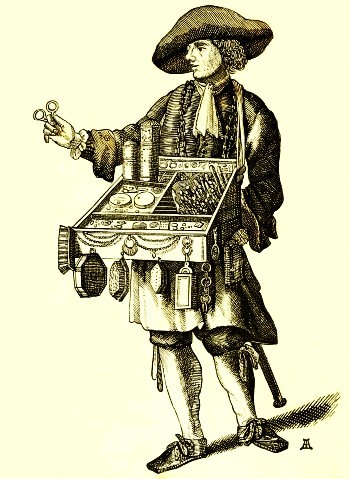
At the height of their popularity in the 17th and 18th centuries, chapbooks were often the only reading material available to those who lived outside major towns and cities. Books were hard to acquire, newspapers were rare, and according to author John Ashton when they could be accessed they were, “poor little flimsy sheets…with very little news in them.”
Catering to a wide audience, chapbooks covered a broad range of topics such as religion, the supernatural, romance, humour, myths and legends, history, biography and true crime. They also condensed larger weightier tomes into slimmer, more streamlined stories. For example, the Elizabethan tragedy Doctor Faustus was adapted to chapbook format that featured 12 very short chapters and 11 woodblock illustrations.
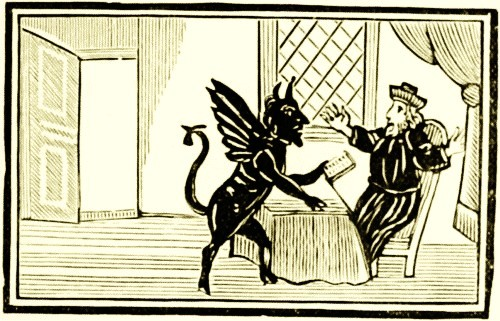
It’ll be fun, they said.
source: Chapbooks of the Eighteenth Century, John Ashton
What does any of that have to do with self-help? Well, hold your horses, I’m getting there.
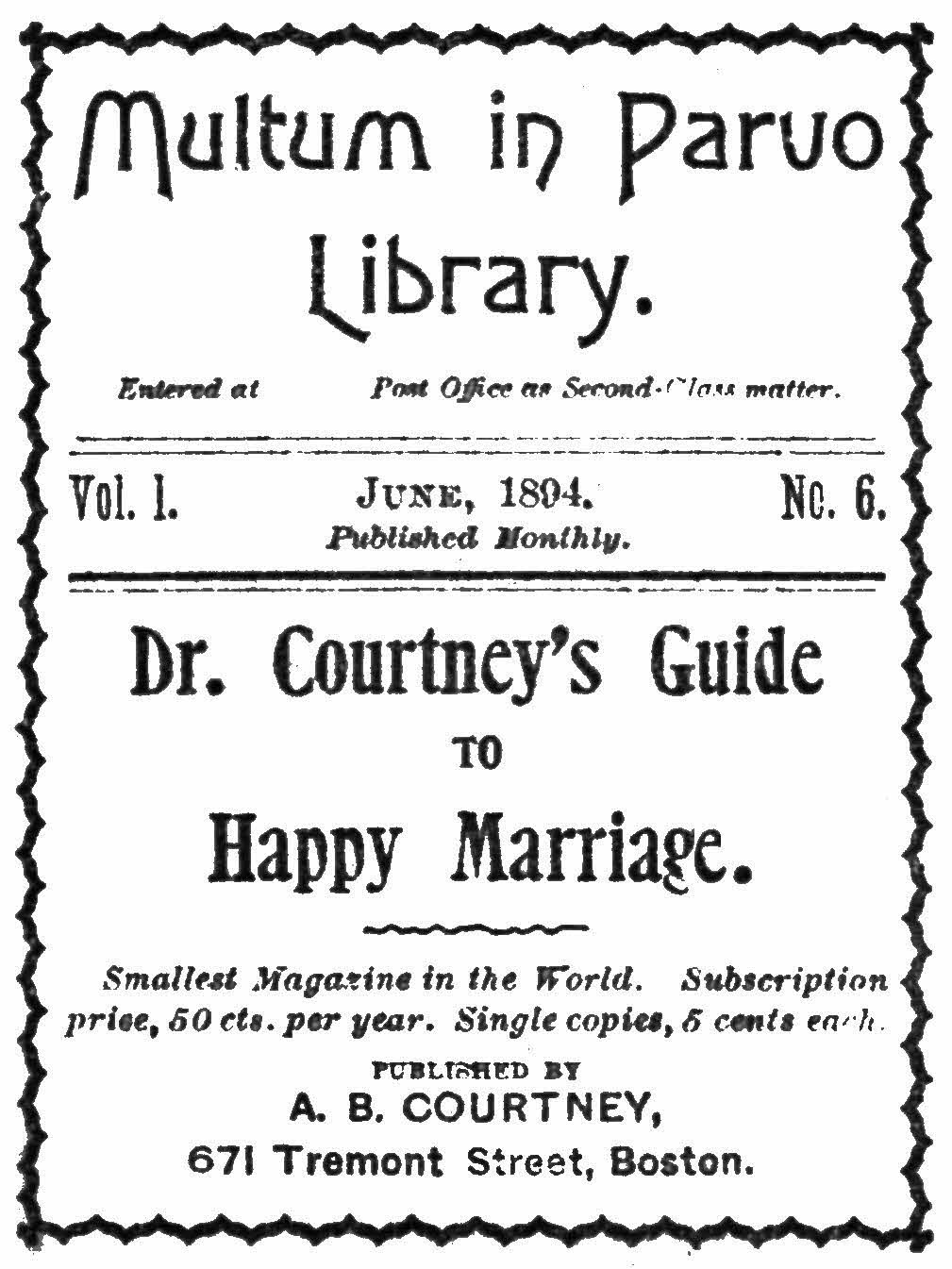
By the late 1800s chapbooks were no longer produced in Britain, but across the pond a publisher in Boston by the name of AB Courtney began producing his own versions under the name Multum in Parvo (Latin for ” a large amount in a small space”).
Like those that had come before them, these chapbooks could also be collected and either stapled or sewn together to create an omnibus. However, unlike their predecessors they were not sold by travelling salesmen but were instead available via mail order.
With titles like: Mormonism Exposed, How to Get Rich, Secrets of the Harem and The Art of Ventriloquism, Courtney’s chapbooks were just as eclectic and entertaining as their predecessors, but they now included a new genre that we would probably label “self-help”.
One of these, written by AB Courtney himself, was Dr. Courtney’s Guide to Happy Marriage, published in 1894.
Now, I know what you’re thinking:
“A marital manual from the 1800s? Oh, I’m sure this is going to be sooooooooo progressive and forward thinking – NOT!”

Photo by Craig Adderley on Pexels.com
Well, cast aside your presumptions, let the scales fall from your eyes, and prepare to be impressed as a 132 year old relationship guide:
- encourages married couples to treat one another with kindness:
Always use the most loving and gentle words when addressing each other.
p.5
- promotes equality between man and wife:
Remember, husband, that … (your wife) is an equal partner with you in the business of life; don’t compel her to become a mere household drudge, working for her board and clothes; she did not marry you for that.
p.4
- And proves itself to be more grounded in reality than the multi-million dollar, world wide bestseller: The Rules
A married life is not one of unalloyed bliss. We ought not to expect this. It has its pains as well as its pleasures.
p.11

Insisting that marriage is NOT a transactional arrangement, a life of domestic servitude, or a stifling, legally binding way to “get some” (I’m paraphrasing), Dr Courtney’s guide proclaims that couples should ONLY marry for love.
Furthermore, it asserts that a happy marriage is built through respectful communication, mutual care and affection, and consistent and concerted effort.

Photo by Andrea Piacquadio on Pexels.com
Even knowing when this book was written and being well aware of the societal expectations placed on both genders during that period of history, when judged against more contemporary dating and marital “advice”, Dr Courtney’s Guide to a Happy Marriage is one of the most constructive, pragmatic and thoughtful relationship guides I’ve ever read.
And, at 18 pages long, it’s also the shortest!
You can find Dr. Courtney’s Guide to a Happy Marriage, read it in 5 minutes, and then enjoy many of the other free pamphlets, chapbooks, novels and non fiction titles over at Project Gutenberg.org.
Resources and Further Reading:
John Ashton, Chapbooks of the Eighteenth Century, 1882, London
AB Courtney, Dr Courtney’s Guide to Happy Marriage, 1894, Boston
Tip Jar
Choose an amount
Or enter a custom amount
Your contribution is appreciated.
Donate Am I Reading Too Much into This?
Well that is a surprise, Dr. A. B. Courtney was a man well before his time, I just read it and love ‘The Golden Precepts’, especially ‘Always leave home with a tender good-bye and loving words. They may be the last.’ Thanks for sharing, which I’m going to do with hubby later (I just hope he doesn’t dwell on a few of the wifely duties! Fair enough, at the time women didn’t go out to work ) 😊
LikeLiked by 1 person
Yes, it’s great isn’t it? Obviously, you have to keep in mind the time it was written (eg. “wifely duties) but the overall sentiment is solid – just be good to each other. Solid advice.
LikeLiked by 1 person
[…] of revelations contained within it would later be reworded and reprinted by anonymous authors in chapbooks and pamplets like: The History of Mother Shipton and Prophecies of Robert Nixon, Mother Shipton, […]
LikeLiked by 1 person