

If you want to know how far we’ve come as a species, particularly in relation to medicine, flick through a book like Domestic Folk-lore by T.F Thiselton-Dyer.
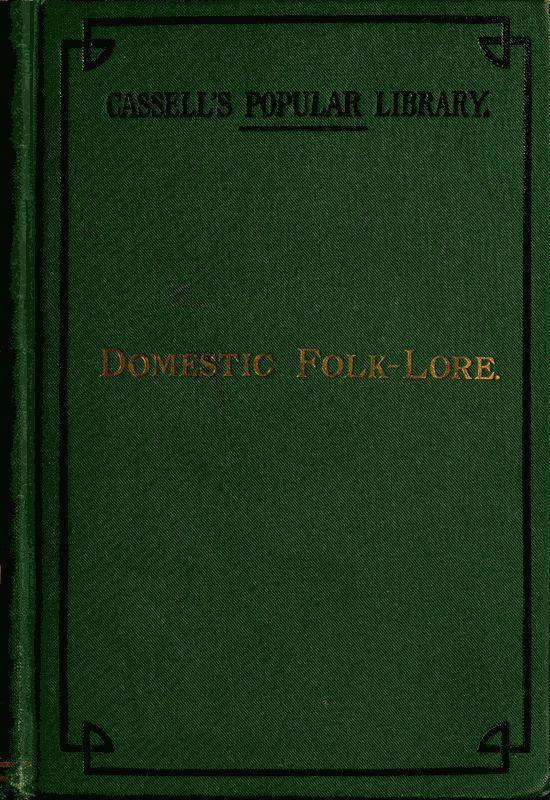
Between its pages, along with methods for attracting true love and thwarting evil spirits, you’ll find a list of home remedies so bizarre they sound like something out of a Monty Python sketch.
Such as –
Crooke

– a “noxious compound” made from:
porter (brown bitter beer), sulphur, and the excrement of the sheep collected in the fields. Every unfortunate child that showed any symptom of measles was compelled to drink large quantities of this mixture
Chapter 7, Common Ailments, Domestic Folklore, T.F. Thiselton-Dyer, 1881
Unsurprisingly, this “remedy” created other issues with the patient, the most serious of which being violent diarrhoea that exhausted, dehydrated and eventually killed them.
More appetisingly, we have:
Small Snacks for Smallpox

One of the most devastating diseases in human history, smallpox was officially eradicated in 1980 but prior to that (and vaccination) it reared its ugly, pustulent head over and over again killing millions.
As it was a blood disease, folks of the past felt the colour red would be beneficial to smallpox patients. They could either wrap themselves in it:
red bed-coverings were thought to bring the pustules to the surface of the body
(ibid)
Or drink it:
Purple dye, pomegranate seeds, or other red ingredients were dissolved in his drink
(ibid)
The method above was considered “et est bona cura” by John of Gaddesen, the 13th Century physician who treated the sons of King Edward I using the red concoction.
But if neither of those methods worked there was always fried mice –
it being thought necessary by some that they should be fried alive
(ibid)

Photo by Glen Hooper on Unsplash
Sticking with animals for a little longer we move to:
The Whooping Donkey

Named for the “whooping” sound made by patients, typically children and infants, as they gasped for breath following a coughing fit, whooping cough was (and still is) a highly contagious respiratory infection. Today it is largely under control thanks to modern medicine and vaccine programs, but back in the day it ran rampant and so did the home remedies with many involving animals.
In Cheshire…this complaint can be cured by holding a toad or frog for a few moments with its head within the child’s mouth, whereas in Norfolk the patient is advised either to drink some milk which a ferret has lapped
Chapter 7, Common Ailments, Domestic Folklore, T.F. Thiselton-Dyer, 1881
This incredibly fatal infant illness was also “treated” by passing the patient three times under the belly and three times over the back of a donkey.
Animals were also a feature of our next treatment, that I’ve dubbed:
Fever Feet

Caused by bacteria carried by fleas and body lice, Typhus Fever was exacerbated by overcrowding, poor personal hygiene and cramped dwellings such as the dosshouses and slums of overcrowded cities and towns.
To treat it, the “peasants” took to trying to draw out the fever through the feet by administering different animal parts. Some sensible, like the freshly cut wool (skirt) of a sheep, others less so:
his wife had placed the spleen of a cow on the soles of his feet, having been assured that it was an efficacious remedy
(Ibid.)
And finally, just when you thought things couldn’t get any stranger, we have:
Laying (Dead) Hands

The least deadly of those listed, wen (now known as cysts or boils) could still wreck havoc on not just a person’s appearance but also their overall health if they became infected.
Luckily, there was a solution:
in days gone by, children were brought by their nurses to be stroked with the hands of dead criminals, even whilst they were hanging on the gallows.
(Ibid.)
Which seems like a fun day out with the kids.

As bizarre as these remedies sound to us now, it’s important to emphasise they were also weird to the people of the past. 19th Century author and folk-tale researcher Reverend T.F Thiselton-Dyer frequently comments on the ludicracy of many of the treatments he has unearthed.
He also expresses surprise that at the time of writing his book (the 1880s), many were still being used and not just by the “lower classes” :
(Indeed) those who believe in the prevention and cure of disease by supernatural means are far more numerous than one would imagine, having their representatives even among the higher classes.
(Ibid)
Which makes sense.
After all, when a loved one is suffering it doesn’t matter who you are or what your economic status is, you just want them to get well. And if a cup of pomegranate juice promises relief, then who among us wouldn’t give it a go?
That said, we should all draw the line at drinking sheep’s dung.

Photo by Jack Carter on Unsplash
RESOURCES AND FURTHER READING
Thiselton-Dyer, T.F., Domestic Folklore, 1881, London accessed via Project Gutenberg
Buy Me a Pencil
Choose an amount
Or enter a custom amount
Thank you so much!
Donate Am I Reading Too Much into This?